
Why Coffee Choice Matters for Cappuccino
Cappuccino is unforgiving of poorly chosen coffee. When you drink coffee black, you taste the coffee directly. When you add milk and foam, you change the equation. Milk does not hide bad coffee — it amplifies certain flaws while softening others.
Bitterness becomes more noticeable in milk drinks. Sharp acidity can clash with the sweetness of steamed milk. Coffee that tastes exciting when brewed black may taste flat or harsh in a cappuccino.
The best coffee for cappuccino is not necessarily the most intense or the most exotic. It is the coffee that achieves balance when combined with milk. This means understanding what milk does to flavor and choosing coffee accordingly.
What Makes Coffee Work Well in a Cappuccino
Coffee that works well in cappuccino has four key characteristics: balance, low harsh acidity, clarity, and consistency.
Balance means the coffee does not lean too heavily in one direction. It should not be aggressively acidic, excessively bitter, or overly fruity. When milk is added, the coffee should remain present without overwhelming the drink.
Low harsh acidity is important because milk softens acidity, but it cannot eliminate it entirely. Coffee with sharp, citrus-like acidity often clashes with the creamy texture of steamed milk. Coffees with mild, rounded acidity work better.
Clarity means the coffee flavor remains distinct even when mixed with milk. Some coffees disappear in milk drinks, leaving only a vague sense of warmth and bitterness. Good cappuccino coffee beans retain character without becoming muddy.
Consistency matters because cappuccino is often a daily drink. Coffee that tastes different from bag to bag disrupts your routine. Repeatability is more valuable than novelty when you are making the same drink every morning.
Roast Level: What Actually Works Best
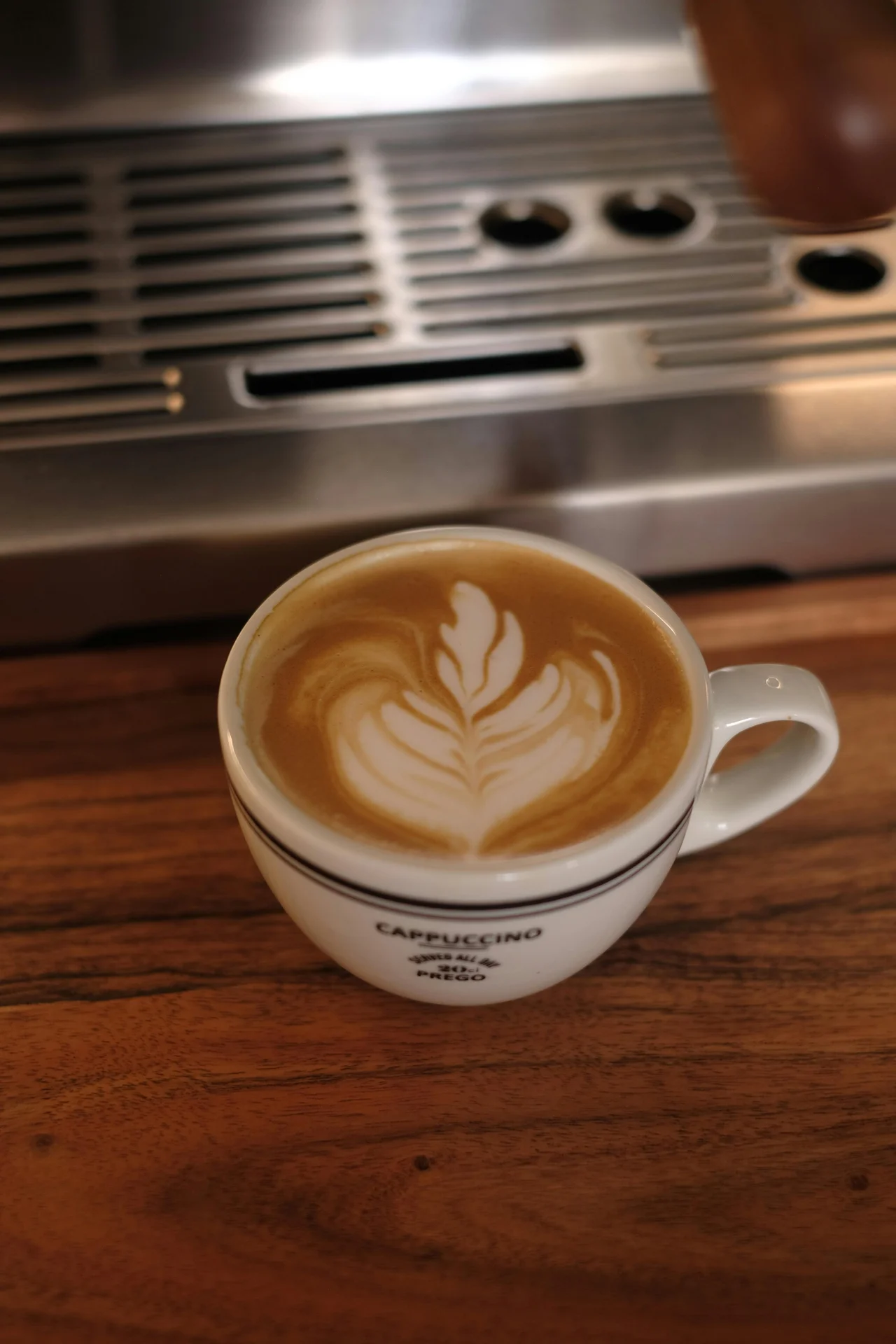
Medium to medium-dark roasts generally work best for cappuccino. This range provides enough body and sweetness to stand up to milk without introducing excessive bitterness or char.
Very light roasts often struggle in cappuccino. Light roasts emphasize acidity and delicate flavors. These characteristics can be appealing in black coffee, but they frequently taste sour or thin when combined with milk. The brightness that defines a light roast can feel out of place in a creamy drink.
Very dark roasts can overpower milk. Dark roasts bring bold, roasted flavors — charred, smoky, sometimes bitter. In small amounts, these flavors add depth. In excess, they dominate the drink and leave a burnt aftertaste. A cappuccino made with very dark roast coffee often tastes one-dimensional.
The roast level for cappuccino should aim for a middle ground. You want enough roast development to create body and sweetness, but not so much that the coffee tastes ashy. Medium roasts typically hit this balance. They offer chocolate and caramel notes without crossing into bitterness.
Flavor Profiles That Pair Well With Milk

Certain flavor profiles naturally complement milk. Chocolate, nutty, caramel, and soft spice notes all work well in cappuccino. These flavors blend harmoniously with the sweetness of steamed milk.
Chocolate notes are perhaps the most compatible with milk. Milk enhances the perception of chocolate, making it taste richer and more pronounced. Coffee with natural cocoa or dark chocolate flavors becomes fuller and more satisfying in a cappuccino.
Nutty flavors — almond, hazelnut, walnut — also pair well. These flavors add warmth without sharpness. They feel comforting and familiar, which suits the nature of cappuccino as a daily drink.
Caramel and toffee notes work because they mirror the natural sweetness of milk. When coffee already has caramel-like qualities, the milk amplifies them. The result is a cohesive, sweet drink that does not require added sugar.
Soft spice notes — cinnamon, clove, nutmeg — can add complexity without overwhelming the palate. These flavors are subtle and blend into the background, supporting rather than dominating.
Milk suppresses acidity and enhances sweetness. Foam affects texture and flavor perception. Coffee with bright, fruity, or floral notes may taste muted or lost in cappuccino. These coffees are often better suited to black preparation methods where their delicate characteristics can shine.
Single Origin vs Blends for Cappuccino
Blends often perform better in cappuccino than single-origin coffees. This is not a matter of quality — single-origin coffees can be excellent. It is a matter of purpose and consistency.
Blends are designed for specific applications. A blend intended for espresso coffee for cappuccino is formulated to balance with milk. The roaster selects beans that complement each other, creating a profile that remains stable and predictable.
Single-origin coffees are often chosen for their unique characteristics. These characteristics may or may not work well in milk drinks. A single origin with bright acidity and floral notes might be striking when brewed as pour-over, but it may taste thin or sour in cappuccino.
Repeatability matters for daily drinks. When you make cappuccino every morning, you develop muscle memory. You adjust your grind, your dose, your timing based on how the coffee behaves. If the coffee changes from bag to bag, you have to relearn the process.
Consistency beats novelty for cappuccino. This does not mean every cup should taste identical, but the core character should remain recognizable. Blends provide this stability. They are engineered to deliver the same experience, cup after cup, which is exactly what cappuccino demands.
Why Some Coffees Taste Bitter in Cappuccino
Bitterness in cappuccino can come from the coffee itself, from the brewing process, or from the interaction between coffee and milk. Understanding these sources helps you choose better coffee beans for cappuccino.
Some coffees are inherently more prone to bitterness. Very dark roasts develop bitter compounds during roasting. These compounds do not disappear when milk is added. Instead, they become more noticeable because milk provides contrast. The sweetness of the milk makes the bitterness stand out.
Extraction plays a role. Over-extracted espresso tastes harsh and bitter. This bitterness carries into the cappuccino. Under-extracted espresso can also taste unpleasant — sour and thin rather than balanced. The ideal extraction produces sweetness and body without excessive bitterness.
The roast and milk interaction matters. Some roast profiles clash with milk. Coffee roasted unevenly or taken too far into second crack often tastes acrid when combined with dairy. The roast should be developed enough to eliminate grassiness but not so far that it tastes burnt.
Bitterness shows up more in cappuccino than in black coffee because milk changes your perception. When you drink black coffee, bitterness is expected. When you drink cappuccino, you expect smoothness. Any harshness feels out of place. Choosing coffee with a balanced roast and brewing it correctly minimizes this problem.
Espresso Grind and Brew Context (High Level)
Cappuccino is traditionally made with espresso. Espresso is coffee brewed under pressure, using finely ground beans and a short extraction time. This method produces a concentrated liquid with a thick texture and strong flavor.
The grind and brew method affect how the coffee tastes in milk. Espresso extracts coffee differently than drip or French press. It pulls more oils, more dissolved solids, and more intensity into the cup. This intensity is necessary for cappuccino because the coffee must remain present when mixed with milk.
Moka pots and other stovetop brewers produce strong coffee, but they do not produce true espresso. The pressure is lower, and the extraction is different. Coffee brewed this way can work in milk drinks, but the texture and flavor will not be identical to espresso-based cappuccino.
Grind size matters. Espresso requires a fine grind to slow down water flow and increase extraction. Pre-ground coffee can work if it is ground for espresso, but freshly ground coffee performs better. Whole bean coffee allows you to adjust grind size for your specific equipment.
How to Choose Coffee for Cappuccino (Simple Checklist)
When choosing coffee for cappuccino, use this checklist to guide your decision.
- ✓Roast level: Look for medium to medium-dark roasts. Avoid very light or very dark extremes.
- ✓Flavor direction: Chocolate, caramel, nutty, or soft spice notes work best. Avoid overly fruity or floral profiles.
- ✓Intended use: Look for coffee labeled for espresso or milk drinks. Blends designed for cappuccino perform consistently.
- ✓Consistency: Choose coffee from roasters who prioritize repeatability. Batch-to-batch variation disrupts your routine.
- ✓Freshness: Coffee loses flavor over time. Look for coffee roasted recently and use it within a few weeks of roasting.
This checklist helps you narrow your options. It does not guarantee perfection, but it increases your chances of choosing cappuccino coffee beans that work well with milk.
Frequently Asked Questions
Is espresso roast best for cappuccino?
Espresso roast typically refers to a medium-dark roast intended for espresso brewing. This roast level often works well for cappuccino because it balances body and sweetness without excessive bitterness. However, the term "espresso roast" is not standardized, so results vary by roaster.
Can you use light roast coffee for cappuccino?
You can, but light roasts often struggle in cappuccino. They tend to taste sour or thin when combined with milk. Light roasts emphasize acidity and delicate flavors that milk suppresses or distorts. If you prefer light roast, you may need to adjust your expectations.
Does cappuccino need stronger coffee?
Cappuccino needs concentrated coffee, not necessarily stronger coffee in terms of caffeine. Espresso provides the concentration necessary to remain flavorful when mixed with milk. The intensity comes from the brewing method, not the bean itself.
Is dark roast better with milk?
Dark roast can work with milk, but very dark roasts often taste bitter or burnt in cappuccino. Medium-dark roasts offer the body and richness of dark roast without the harshness. Balance matters more than roast intensity.
Can pre-ground coffee work for cappuccino?
Pre-ground coffee can work if it is ground for espresso and used quickly. However, coffee begins losing flavor as soon as it is ground. Whole bean coffee stays fresh longer and allows you to adjust grind size for your equipment. Freshly ground coffee consistently produces better cappuccinos.
Should I choose single origin or blend for cappuccino?
Blends are generally more reliable for cappuccino. They are designed for consistency and balance with milk. Single-origin coffees can work, but their unique characteristics may not always complement milk drinks. For daily cappuccino, blends are usually the better choice.
Does the origin of the coffee matter for cappuccino?
Origin affects flavor, but it matters less in cappuccino than in black coffee. Milk suppresses origin characteristics. Roast level and blend composition have more impact on how coffee tastes in milk drinks. Focus on roast and flavor profile rather than origin alone.
Choosing the Best Coffee for Cappuccino
Cappuccino rewards balance. The best coffee for cappuccino is not the most expensive, the most exotic, or the most intensely flavored. It is the coffee that works reliably with milk, producing a smooth, satisfying drink without harshness or imbalance.
Understanding what makes coffee work in cappuccino helps you make better decisions. Whether you are choosing coffee for the first time or refining your routine, the principles remain the same: favor balance, avoid extremes, and prioritize consistency. These choices build a foundation for better cappuccinos, day after day.